Condo and High-Rise Dryer Vents: Shared Runs and Rules
Dryer vents in condos and high-rises can be long, shared or hard to reach. Who's responsible, what to ask your association and how cleaning works.
In a single-family house, the dryer vent is simple to picture: a duct runs from the back of the dryer to an outside wall or the roof. In a condo or high-rise, it's often more complicated. The vent may run through interior walls and ceilings, connect to a shared vertical shaft, or exit high on the side of the building where no one can easily reach it. Along the Palm Beach County coast, where condos are a big part of the housing mix, that complexity is worth understanding before something goes wrong.
Common condo dryer vent setups
Buildings vary, but most fall into a few patterns:
Individual runs to an exterior wall. Each unit has its own duct leading to a vent on the building's exterior, often on a balcony wall or high on the facade. The run may be long and include several turns through the ceiling.
Shared vertical risers. In some mid- and high-rise buildings, dryers on multiple floors connect into a common vertical shaft that exhausts at the roof. The building may rely on fans to keep air moving through the riser.
Booster fans. Where an individual run is too long for the dryer to push air on its own, a booster fan may be installed in the line.
Ventless dryers. Some units use condensing or heat pump dryers that don't need an exterior vent at all. Those have their own maintenance needs, set out in the manufacturer's instructions.
If you don't know which setup your unit has, your association or property manager should.
Who's responsible for what
This is the first question to answer, and it depends on your condo documents. In many associations:
- The unit owner is responsible for the dryer, the transition duct behind it and the lint filter.
- The association may be responsible for ducts inside common walls, shared risers, roof fans and exterior vent caps.
But every building is different. Some associations schedule building-wide vent cleaning; others leave each owner to handle their own. Ask your manager for the rules in writing before hiring anyone.
Questions to ask your association
- Does my dryer vent run to its own exterior exit, or into a shared riser?
- Who is responsible for cleaning each part of the vent?
- Does the building schedule dryer vent cleaning, and when was the last one?
- What are the rules for contractors: approved hours, insurance paperwork, elevator reservations, parking and access to roofs or balconies?
- Is there a booster fan, and who maintains it?
Having those answers ahead of time makes any cleaning far easier to schedule.
Signs your condo dryer vent is clogged
You may not be able to see the exit, so watch the dryer itself:
- Clothes take longer to dry or need a second cycle.
- The dryer or the laundry closet gets very hot.
- The unit feels humid when the dryer runs.
- You notice a burning smell. Stop the dryer and have it checked.
- An error or warning light about restricted airflow, which many newer dryers have.
The U.S. Fire Administration lists failure to clean as a leading cause of home dryer fires. In a building where units share walls, that matters for your neighbors as well as you.
What owners can do
Even when the association handles the long runs, owners control the parts that matter most day to day:
- Clean the lint filter before or after every load, as the USFA recommends.
- Check the transition duct behind the dryer. It should be rigid or flexible metal, not plastic or foil, and not crushed when the dryer is pushed back into a tight closet.
- Don't overload the dryer.
- Don't run the dryer when you're away from home or asleep.
- Follow the manufacturer's instructions, including any maximum vent length and requirements for booster fans.
How professional cleaning works in a condo
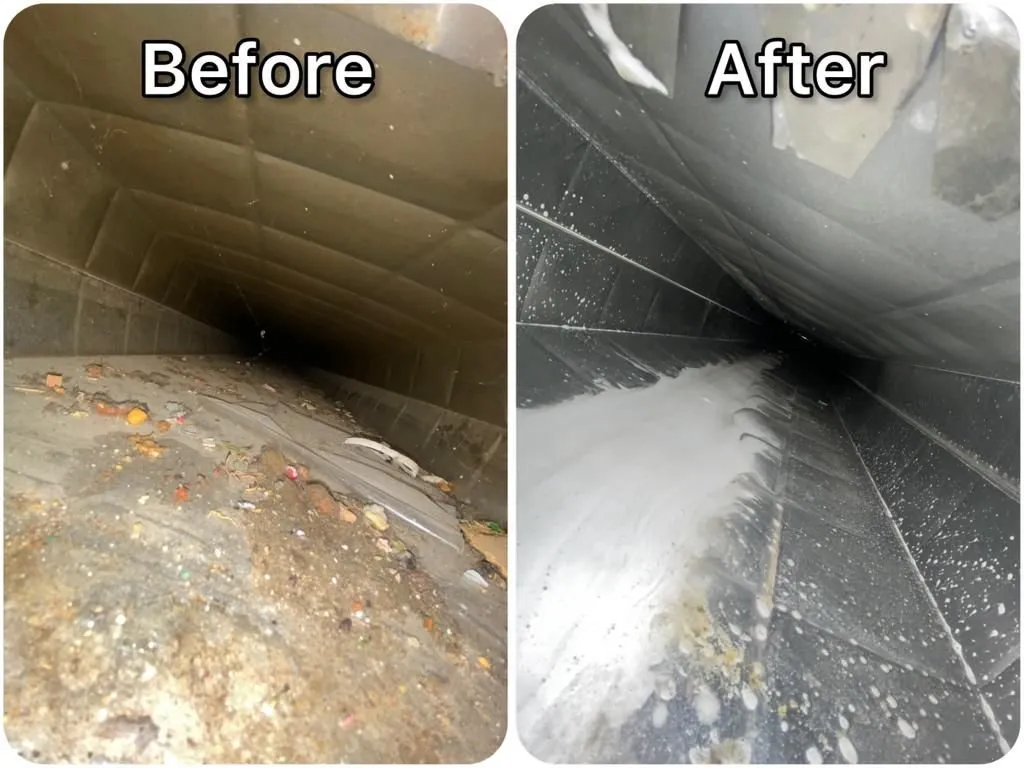
Cleaning a condo vent usually involves disconnecting the dryer, cleaning from the unit side, and, where access allows, clearing the exterior exit. When the exit is several stories up, access may depend on building rules or on equipment that the association arranges.
At Apex Air Duct Cleaning Riviera Beach, dryer vent cleaning is $99 for up to 10 feet, plus $15 for each additional foot. Condo runs that travel across the ceiling can be longer than owners expect, so knowing the approximate length helps estimate the price. For building-wide or shared systems, ask us about commercial dryer vent cleaning, which is quoted after a visit.
Air ducts in condos
The same building rules usually apply to air duct cleaning. Many condo units have a single air handler in a closet with ducts above the ceiling. Air duct cleaning is $199 for up to 10 vents, plus $29 per additional vent, and many smaller units fall within the base price.
Plan ahead
Condo living around Riviera Beach, FL makes a lot of maintenance easier, but dryer vents are one area where owners need to ask questions. Check your documents, talk to your manager and keep up with the lint filter. When it's time for a cleaning, see our pricing page.